Specialist Disability Accommodation (SDA)
A complete guide to NDIS Specialist Disability Accommodation — what SDA housing is, the four design categories and dwelling types, how SDA funding and eligibility work, and how to find current SDA accommodation and vacancies across Australia with Housing Match.
What is Specialist Disability Accommodation?
Specialist Disability Accommodation (SDA) is a category of NDIS funding that pays for purpose-built or significantly modified homes designed for people with extreme functional impairment or very high support needs. SDA is not a support service — it is the funding that subsidises the cost of the housing itself, allowing providers to invest in building and maintaining high-quality, accessible SDA housing for NDIS participants.
NDIS Specialist Disability Accommodation is separate from the support services a participant receives. SDA pays for the dwelling — the bricks and mortar — while supports such as Supported Independent Living (SIL) are funded separately under a different part of an NDIS plan. This separation allows participants to choose their SDA accommodation and their support provider independently.
SDA housing is designed for NDIS participants who cannot live in standard housing because of their disability. To receive SDA funding, a participant's plan must include SDA under Capital Supports, supported by evidence from an occupational therapist or allied health professional showing that standard housing cannot meet their needs.
Approximately 28,000 NDIS participants are estimated to have SDA funding in their plans. Despite growing investment in SDA supply, finding available SDA properties that match a participant's specific design category, location and lifestyle preferences remains a significant challenge.
Housing Match helps you find SDA housing by providing a searchable national register of current SDA properties and vacancies. Participants, support coordinators and allied health teams can search NDIS specialist disability accommodation by location, design category and accessibility features — and use the SDA Finder to be matched against current and upcoming vacancies.
The Four SDA Design Categories
All SDA properties are enrolled under one of four NDIS design categories, each designed to meet the needs of participants with different types of disability and support requirements.
Improved Liveability
Designed for participants with sensory, cognitive or intellectual disabilities. Features improved physical access, lighting, acoustics and layout to support daily living.
Fully Accessible
Designed for participants with significant physical disability. Provides comprehensive physical access including wider doorways, step-free access, accessible bathrooms and kitchen features.
Robust
Designed for participants whose disability involves extreme functional impairment or very high support needs, including reinforced walls, secure fencing and durable fitout for safety.
High Physical Support
The highest design standard — includes ceiling hoists, emergency power, structural provisions for complex assistive technology, and is suited to participants with very high physical support needs.
SDA Dwelling Types
SDA housing is delivered across several dwelling types. The NDIS sets different payment rates depending on the building type, design category and location. When you search for SDA accommodation on Housing Match, each listing shows the dwelling type alongside its design category and enrolment status.
Apartment
Self-contained units within a larger building, often single-storey with lift access. Common in metropolitan areas for participants seeking independent living with on-call support.
Villa / Townhouse
Single-storey attached dwellings with private outdoor space. A popular SDA housing option for small households combining accessibility with a home-like setting.
House
Freestanding dwellings, typically offering the most space and outdoor area. Suited to group home arrangements or participants needing larger, purpose-built layouts.
Duplex
Two attached dwellings sharing a common wall. Provides a balance of privacy and shared support staffing for two small households.
Group Home
Larger dwellings configured for several participants sharing supports and living together. The most established SDA accommodation model for shared living.
Specialist Dwelling
Purpose-built homes designed from the ground up to meet a specific SDA design category, often incorporating smart-home technology and complex assistive equipment.
How SDA Funding Works
SDA funding is included in an NDIS participant's plan as a specific line item under 'Capital Supports'. The funding is paid by the NDIS directly to enrolled SDA providers to cover the cost of building, maintaining and administering specialist housing.
SDA payment rates are set by the NDIS and vary depending on the design category, building type (apartment, villa, house), and location. Participants contribute a Reasonable Rent Contribution (RRC) — currently 25% of the Disability Support Pension plus the Commonwealth Rent Assistance amount — toward the cost of accommodation.
NDIS SDA Payment
Paid to enrolled SDA providers based on design category and location
Reasonable Rent Contribution
Participant contribution: ~25% of DSP + CRA (Commonwealth Rent Assistance)
SIL Funding (Separate)
Support worker costs are funded separately through a SIL allocation in your plan
Getting SDA Funding in Your NDIS Plan
SDA funding is not automatic — it requires evidence to demonstrate that standard housing cannot meet your needs. The evidence-gathering process typically involves an occupational therapist (OT) completing a functional assessment and housing assessment, which documents why SDA is the most appropriate and cost-effective option for you.
Gather Evidence
Work with an OT, specialist support coordinator or allied health professional to document your housing and support needs.
NDIS Plan Review
Present the evidence at your next NDIS plan review or request an unscheduled review to consider SDA for the first time.
SDA Approval
If approved, SDA will appear in your plan under Capital Supports with a specific design category and dwelling type.
Find a Property
Search Housing Match for available SDA properties that match your approved design category, location and lifestyle preferences.
Move In
Work with your support coordinator and the SDA provider to finalise your service agreement and move-in arrangements.
How to Find Current SDA Housing Through Housing Match
Housing Match lists current SDA vacancies from registered providers across Australia. You can search for NDIS specialist disability accommodation by location, design category, accessibility features and household composition — all in one place.
Find SDA Housing
Use the SDA Finder to tell us your preferred location, design category, accessibility requirements and support needs. We match your request against current and upcoming SDA vacancies and notify registered providers who service your area.
Find SDA HousingSearch SDA properties
Browse all available SDA properties and filter by state, suburb, design category (Improved Liveability, Fully Accessible, Robust, High Physical Support), accessibility features and vacancy status.
Search SDA propertiesBrowse by location
Explore SDA housing in specific regions including Newcastle, Lake Macquarie, the Hunter, Sydney and other areas across NSW, Victoria, Queensland and more.
SDA housing in NewcastleEach SDA listing shows the design category, enrolment status, number of participant places, accessibility features, the SDA provider and the SIL provider (if one is assigned), so you can assess whether a property is right for you before enquiring.
Explore disability housing by location
Explore Specialist Disability Accommodation in key regions across New South Wales.
For Support Coordinators
Support Coordinators play a central role in helping participants secure NDIS specialist disability accommodation. Housing Match is free for Support Coordinators and allied health professionals — you can search current SDA vacancies, create detailed participant profiles, run AI compatibility assessments against specific properties, and submit referrals directly to registered SDA providers from a single workspace.
Can't Find Suitable SDA Housing? Try the Housing Match Finder
SDA supply is limited and demand is high. If you cannot find a suitable SDA property listed today, use the Housing Match Finder to tell us what you need — your preferred location, design category, accessibility requirements and support needs. We will match your request against current and upcoming SDA vacancies and notify registered providers who service your area.
Start a Housing Match Finder requestFor SDA Providers: List Properties, Receive Qualified Referrals
Housing Match helps SDA providers list properties, attract suitable participants and manage the referral and placement workflow from a single platform. Our AI compatibility assessment helps ensure that SDA vacancies are filled with participants who are genuinely compatible with the home and any existing household members.
- List SDA properties with design category, features and vacancy details
- Receive AI-matched participant referrals aligned to your SDA category
- View participant funding details and functional assessments
- Manage applications, inspections and placements in one dashboard
- Track SDA financial performance and vacancy rates
- Generate executive reports for board and investor reporting
Frequently Asked Questions
What is Specialist Disability Accommodation (SDA)?
Specialist Disability Accommodation (SDA) is a category of NDIS funding that pays for purpose-built or modified homes specifically designed for people with extreme functional impairment or very high support needs. SDA funding covers the cost of the accommodation itself — the bricks and mortar — and is separate from the support services funded through SIL.
Who qualifies for SDA funding?
SDA is available to NDIS participants with very high support needs who require specialist housing to implement their overall support plan. To receive SDA funding, participants typically need supporting evidence from allied health professionals, including occupational therapist assessments, demonstrating that standard housing cannot meet their needs.
What are the SDA design categories?
There are four SDA design categories: Improved Liveability (for sensory, cognitive or intellectual disabilities), Fully Accessible (for significant physical disability), Robust (for participants with extreme functional impairment or challenging behaviour), and High Physical Support (for very high physical support needs including ceiling hoists and structural provisions for assistive technology).
How does SDA funding work financially?
SDA funding is paid directly to enrolled SDA providers via the NDIS to subsidise the cost of specialist housing. Participants also contribute a 'Reasonable Rent Contribution' — currently set at 25% of the Disability Support Pension. The SDA payment rates vary depending on design category, building type and location.
Can I receive both SDA and SIL funding?
Yes. Many SDA participants also receive Supported Independent Living (SIL) funding to cover the cost of support workers who assist with daily tasks. SDA pays for the home; SIL pays for the people who support you within that home. They are separate funding lines within an NDIS plan and are managed independently.
How do I search for SDA properties on Housing Match?
You can search for available SDA properties on Housing Match by filtering properties to 'SDA Property' type and selecting your required design category. Each SDA listing includes details about the design standard, location, number of places, accessibility features, and the SIL provider (if applicable) who delivers supports in the home.
How long does it take to find SDA housing?
Finding suitable SDA housing can take time because SDA supply is limited relative to demand. Housing Match helps by giving participants and support coordinators real-time visibility of available SDA vacancies nationwide. Creating a detailed participant profile also improves the speed of matching, as providers can proactively reach out to compatible participants when a vacancy arises.
What is an SDA enrolment?
SDA enrolment is the process by which an SDA property is formally registered with the NDIS as meeting the required design standards for a specific SDA category. Only enrolled SDA properties can receive SDA funding payments. Providers must complete an enrolment process and have the property certified against the relevant design standard.
How do I find NDIS specialist disability accommodation near me?
You can search for current NDIS specialist disability accommodation on Housing Match by browsing the SDA property directory and filtering by your state, suburb, preferred SDA design category (Improved Liveability, Fully Accessible, Robust or High Physical Support) and required accessibility features. Each listing shows the enrolment status, number of participant places and the SDA and SIL providers involved. If nothing suitable is listed today, the Housing Match Finder lets you submit your requirements so we can match you against current and upcoming vacancies.
What is the difference between Specialist Disability Accommodation and Supported Independent Living?
Specialist Disability Accommodation (SDA) and Supported Independent Living (SIL) are two separate NDIS funding categories. SDA pays for the housing itself — the purpose-built or modified dwelling. SIL pays for the support workers who help with daily tasks inside that home. A participant can have both in their plan: SDA funds the home and SIL funds the supports delivered within it. They are managed independently, so you can change your SIL provider without changing your SDA home.
Current SDA Properties

SDA like no other in Newcastle's West End
Newcastle West, NSW

4-bedroom SDA home in Sunbury VIC 3429
Sunbury, VIC

2-bedroom SDA home in Winter Valley VIC 3358
Winter Valley, VIC

3-bedroom SDA home in Wyndham Vale VIC 3024
Wyndham Vale, VIC

3-bedroom SDA home in Lucas VIC 3350
Lucas, VIC

2-bedroom SDA home in Winter Valley VIC 3358
Winter Valley, VIC
Related resources
Related insights & resources
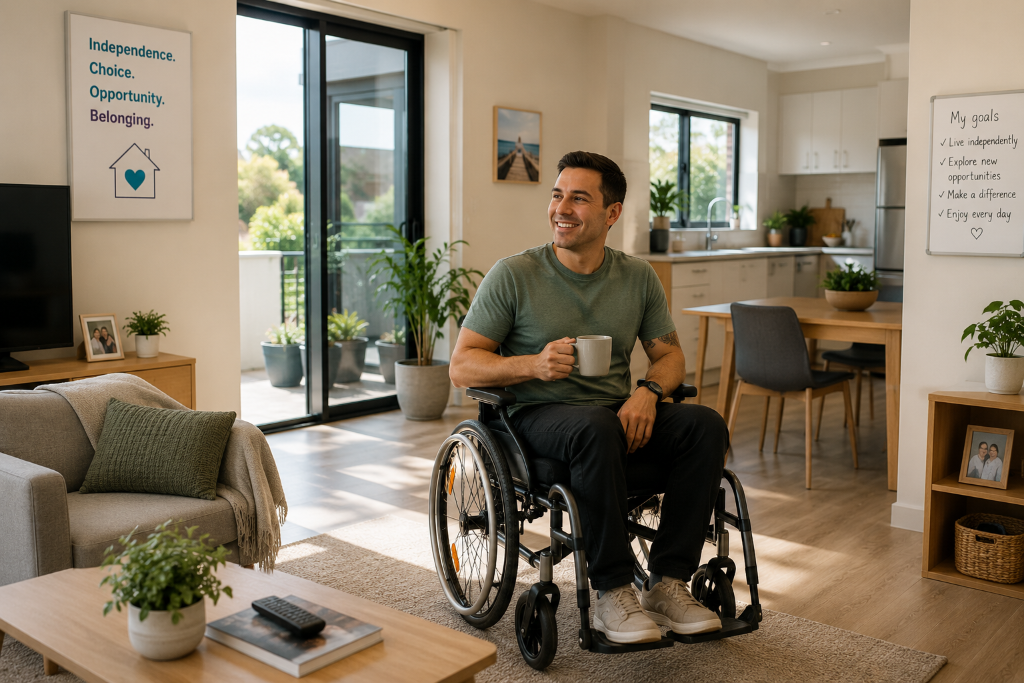
Understanding Specialist Disability Accommodation (SDA): Categories, Funding and How to Apply
Specialist Disability Accommodation (SDA) provides purpose-built or modified homes for NDIS participants with extreme functional impairment or very high support needs. Here's how SDA funding works and how to find available SDA properties.
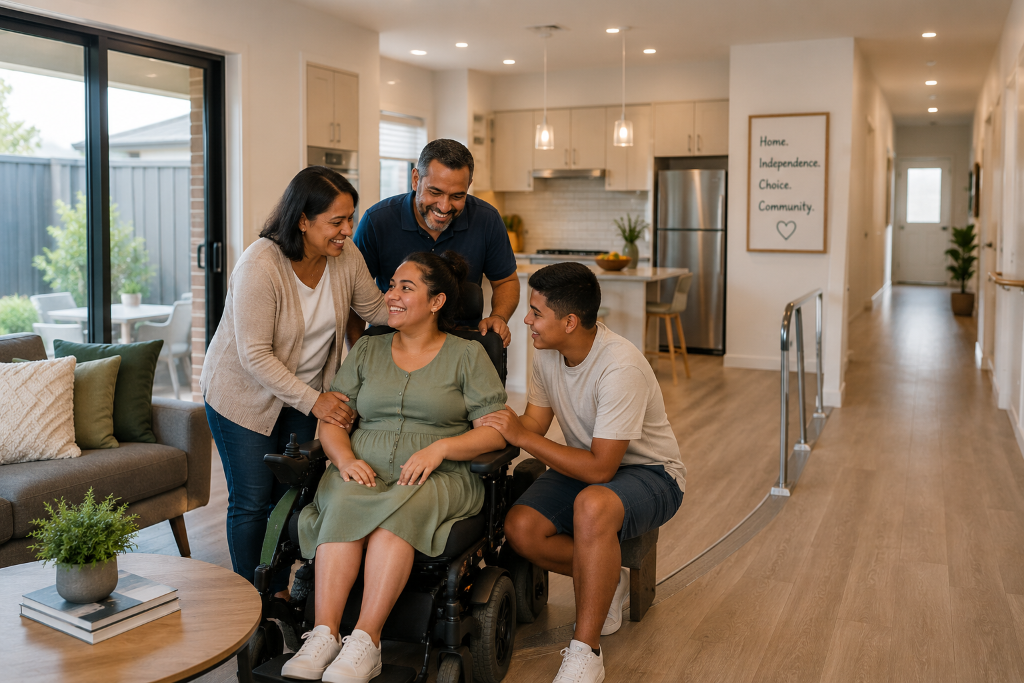
What is Supported Independent Living (SIL)? A Complete Guide for NDIS Participants
Supported Independent Living (SIL) is one of the most significant NDIS supports available — here's everything you need to know about how it works, who qualifies, and how to find SIL vacancies near you.
Find SDA Housing That Meets Your Needs
Browse available SDA properties across Australia or register to receive matched recommendations based on your design category and support needs.