What is Supported Independent Living (SIL)?
SIL is NDIS funding for support workers who help you live independently. Search SIL vacancies from providers across Australia and create a free profile to get matched.
What is Supported Independent Living (SIL)?
Supported Independent Living (SIL) is an NDIS-funded support that pays for assistance with daily tasks so people with disability can live as independently as possible. SIL is most commonly delivered in a shared home with other NDIS participants, though individual arrangements are also possible.
The most important thing to understand early: SIL funds the support, not the home itself. The funding pays for trained support workers who help with personal care, cooking, cleaning, medication management and community participation. The physical property — rent, groceries and utilities — is separate.
SIL is usually a significant funding allocation that covers 24/7 or substantial daily support. The funding is paid to a registered SIL provider who employs and manages the support workforce. SIL is designed to help people with disability build skills and confidence to live independently, on their own terms, in a home of their choosing, with people they feel compatible with.
For official NDIS guidance on SIL, visit the NDIS Supported Independent Living page.
Who is SIL for?
SIL is designed for NDIS participants who need support for a significant part of the day, every day. It may be appropriate if you need help with personal care, cannot safely be left alone for long periods, or require substantial daily assistance to live independently.
SIL is generally not funded if you only need a few hours of support each week — in those cases, support is usually funded through other Core Supports. The NDIA assesses each person individually, looking at functional capacity, support requirements and goals before determining whether SIL is reasonable and necessary.
SIL may be considered when
- You need help with daily personal care most days
- You cannot be safely left alone for extended periods
- You need overnight support or monitoring
- Less intensive support models do not meet your needs
SIL is not a guarantee
Eligibility is determined by the NDIS based on individual circumstances. Housing Match does not determine NDIS eligibility or funding. A support coordinator or allied health professional can help gather the evidence needed for a SIL request.
For official NDIS eligibility guidance, see the NDIS access requirements.
What does SIL funding cover?
SIL funding covers the support worker hours you need across your day. It does not cover your ordinary living costs. Understanding the difference helps you plan your housing and finances realistically.
What SIL may cover
- Personal care (showering, dressing, grooming)
- Meal preparation and mealtime support
- Medication management and administration
- Household tasks such as cleaning and laundry
- Overnight support (sleepover or active night)
- Skills development (cooking, budgeting, using transport)
- Support to participate in social and community activities
- 24/7 or significant daily support worker hours
What SIL does not cover
- Rent or board for the property
- Groceries and food
- Utilities (electricity, gas, water, internet)
- The cost of the physical home itself
- Ordinary living expenses (clothing, entertainment, personal items)
- Specialist Disability Accommodation (SDA) costs — separate funding
- Transport costs (funded separately under Core Supports)
- Standalone therapy or allied health supports
In short: SIL pays for the people who support you. Rent, food, bills and the home itself are separate. If you live in an SDA property, SDA funding covers the dwelling — see our SDA guide for details.
SIL vs SDA — What's the Difference?
This is one of the most common sources of confusion in NDIS housing. The distinction is straightforward once you separate the support from the home.
SIL
Supported Independent Living
Funds the support — the workers who help you with daily tasks like personal care, cooking, medication and community participation.
- •Paid to a registered SIL provider
- •Covers support worker hours, not rent
- •Can be in a shared home or individual arrangement
SDA
Specialist Disability Accommodation
Funds the home — the physical dwelling designed or modified for participants with very high support needs.
- •Paid to the SDA provider or property owner
- •Covers the building, not the support hours
- •Four design categories: Improved Liveability, Fully Accessible, Robust, High Physical Support
Key difference: SIL and SDA are separate supports with separate funding. Many participants in SDA homes also receive SIL funding for their support needs — but you can have SIL without SDA, or SDA without SIL, depending on your circumstances. The NDIS determines eligibility for each independently.
How SIL Support Arrangements Work
SIL support is typically delivered according to a roster of care — a schedule that maps out how many hours of support you need across each day and at what ratio. The ratio describes how many participants one support worker is assisting at a given time.
1:1 support
One support worker dedicated to you. Typically used when you have complex or high-intensity support needs that require individualised attention.
1:2 support
One support worker shared between you and one other resident. Common during busier periods of the day such as morning and evening routines.
1:3 or 1:4 support
One support worker shared across three or four residents. Often used during lower-support periods of the day when collective needs allow it.
Sleepover support
A worker sleeps on-site and is available if needed overnight. Suited to households where active overnight support is not required but reassurance is important.
Active night support
A worker is awake and actively providing support throughout the night. Used when one or more residents have overnight support needs that require continuous attention.
Important: Support ratios are not fixed or universal. Your actual arrangement depends on your assessed needs, the needs of your housemates, and the funding in your NDIS plan. A SIL quote (roster of care) maps out the specific hours and ratios across each day. A support coordinator can help you understand and negotiate your roster of care.
Finding a SIL Home
Finding the right SIL home should involve more than locating an empty bedroom. A successful placement depends on a range of factors that affect your daily life and long-term wellbeing:
Location
Proximity to family, community, transport and services that matter to you
Accessibility
Physical features that meet your mobility and sensory needs
Support needs
The right support ratio and staff skills for your requirements
Household composition
Who already lives there and whether the household is compatible
Lifestyle & routines
Daily patterns, social preferences and household culture
Communication
How household members communicate and interact
Existing housemates
Compatibility with the people you will share your home with
Provider suitability
The provider expertise, approach and values
Community access
Opportunities to participate in your local community
Housing Match brings these factors together in one place. Instead of calling dozens of providers individually, you can search and compare SIL vacancies with detailed household profiles, support arrangements, accessibility features and housemate information — then assess compatibility before you make contact.
Search Current SIL VacanciesWhy Housemate Compatibility Matters
Successful shared living is not simply about matching funding and an available vacancy. The people you live with shape your daily life — your routines, your comfort, your sense of home. When housemates have complementary lifestyles, compatible communication styles and aligned expectations, shared living works well. When they do not, placements can break down.
Compatibility involves many dimensions:
Housing Match uses an AI-powered compatibility assessment to evaluate the fit between a participant profile and an existing SIL household. The assessment considers lifestyle and interests, communication style, daily routine, support needs, behaviour support requirements and community participation preferences. This helps participants explore vacancies where they are more likely to feel at home — and helps providers identify suitable participants for each household.
Questions to Ask Before Choosing a SIL Home
Before committing to a SIL arrangement, it is worth asking each provider some practical questions. A good provider will welcome these questions. If you are not getting clear answers, that may be a sign to keep looking.
The household
- Who already lives there, and what are their lifestyles and routines?
- Can I meet potential housemates before committing?
- What is the household culture — quiet, social, structured, relaxed?
Support arrangements
- What support is available during the day, evening and overnight?
- How are staff rostered, and how flexible is the roster if needs change?
- What happens overnight — is it sleepover or active night support?
- Can I have input into which support workers assist me?
The home and costs
- What accessibility features exist in the home?
- What are the rent, board and utility arrangements, and what is covered?
- Are there any additional costs I should expect beyond SIL funding?
Rights and safeguards
- What happens if the placement is not working out?
- How are complaints and feedback handled?
- Can I change SIL providers if I am not satisfied?
- How does the provider support my choice and control?
How a Support Coordinator Can Help
A support coordinator can play a valuable role in exploring SIL options. They can help you understand your NDIS funding, identify suitable providers, arrange property viewings, review service agreements, and support you through the application and transition process.
If you are a support coordinator, Housing Match lets you search and shortlist SIL vacancies on behalf of your participants, compare providers and generate referral packs — all from one platform.
Search Housing for a ParticipantSearch SIL Vacancies
Explore current SIL vacancies from providers across Australia. Each listing includes the household, support arrangements, accessibility features and availability.
Current SIL Vacancies

Modern 2 Bedroom SDA Homes in Unanderra
Unanderra, NSW
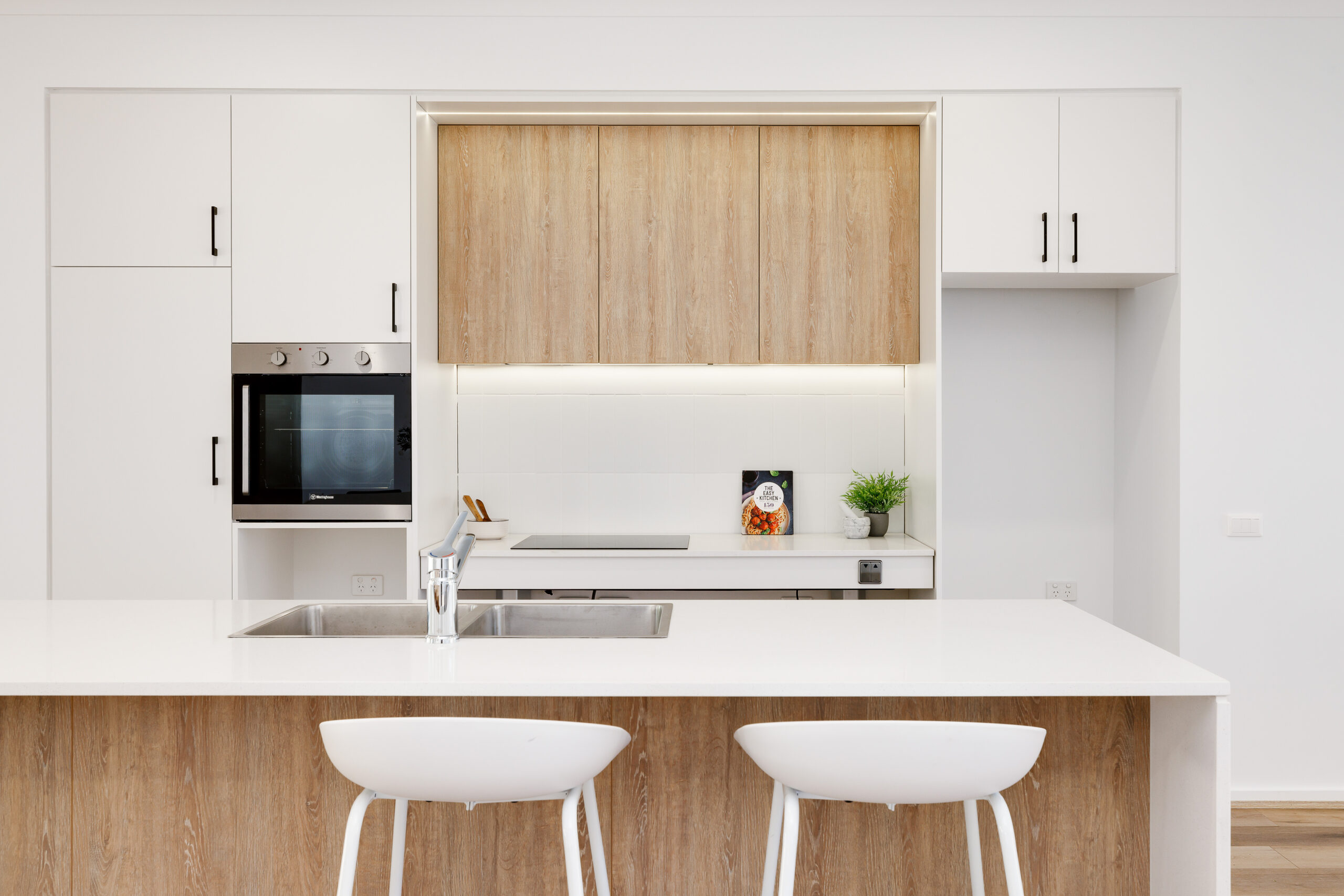
Brand New 3 Bedroom High Physical Support SDA Homes in Nowra
Nowra, NSW

Fully Accessible Home in Mayfield
Mayfield, NSW

Accessible Home in Wallsend
Wallsend, NSW

Shared Female SIL - Edgeworth
Edgeworth, NSW

Brand New 3 Bedroom SDA Homes in Edgeworth
Edgeworth, NSW
Find SIL Providers
Exploring provider information is an important part of making an informed decision. Housing Match's provider directory lets you browse SIL providers by location, expertise and services — so you can compare approaches and contact providers directly.
Explore SIL ProvidersCreate a Free Participant Profile
Creating a participant profile on Housing Match lets you receive matched SIL vacancy recommendations based on your support needs, location preferences, lifestyle and housemate compatibility. It is free for participants, families and support coordinators — and you stay in control of your information.
Once your profile is set up, Housing Match can surface suitable vacancies as they become available, so you do not have to search manually every day.
Create Free Participant ProfileHave a SIL Vacancy?
SIL providers can create a Housing Match provider profile, list available properties and vacancies, and receive compatible participant enquiries — all through the existing Housing Match platform. There is no separate system to join.
- List SIL vacancies with detailed household profiles
- Receive compatible participant referrals through AI matching
- Review compatibility assessments before accepting referrals
- Manage the full application, inspection and confirmation workflow
- Track financial sustainability and occupancy rates
Explore disability housing by location
Browse Supported Independent Living vacancies and disability housing options in key regions across New South Wales.
SIL housing in Newcastle
Current SIL vacancies in Newcastle and the Hunter Region.
SIL housing on the Central Coast
Available Supported Independent Living homes on the Central Coast.
SIL housing in Lake Macquarie
SIL vacancies in Lake Macquarie, south of Newcastle.
Disability housing in the Hunter Region
SIL, SDA and community housing across the Hunter.
Disability housing in Sydney
SIL and SDA options across Greater Sydney.
Search all SIL vacancies
Browse every available SIL vacancy nationwide.
Information reviewed September 2026. NDIS information on this page is based on current official NDIS guidance. Housing Match does not provide legal, funding or eligibility advice — always check the NDIS website for your circumstances.
Frequently Asked Questions
What does SIL mean?
SIL stands for Supported Independent Living. It is an NDIS-funded support that pays for help with daily tasks so people with disability can live as independently as possible — usually in a shared home with other participants, though individual arrangements are also possible.
What is a SIL home?
A SIL home is a residence where NDIS participants live with funded support workers who assist with daily activities like personal care, cooking, medication and household tasks. The home may be shared with other participants or arranged individually. SIL funding covers the support, not the physical home itself.
What does SIL funding pay for?
SIL funding pays for support worker hours — personal care, meal preparation, medication management, household tasks, overnight support and skills development. It does not pay for rent, groceries, utilities or the cost of the home. Those everyday living costs are separate from SIL funding.
Does SIL pay rent?
No. SIL funding does not cover rent, board or the cost of the physical home. Rent and ordinary living expenses (groceries, utilities, personal items) are paid from your own income or other funding sources. If you live in a Specialist Disability Accommodation (SDA) home, SDA funding covers the dwelling separately.
What is the difference between SIL and SDA?
SIL (Supported Independent Living) funds the support workers who help you with daily tasks. SDA (Specialist Disability Accommodation) funds the physical home itself — the bricks and mortar designed for participants with very high support needs. They are separate supports with separate funding. Many participants in SDA homes also receive SIL, but you can have either one without the other.
Can I choose my SIL provider?
Yes. As an NDIS participant you have the right to choose your SIL provider. Housing Match lets you browse provider profiles, compare their expertise and approach, and contact them directly. Your support coordinator can help you evaluate options and transition between providers if needed.
Can I choose who I live with in SIL?
Yes. Choosing who you live with is one of the most important decisions in shared SIL. Housing Match's compatibility assessment helps you understand how your lifestyle, routines, communication and support needs align with existing housemates before you commit. You should always have the opportunity to meet potential housemates before accepting a placement.
Can I change SIL providers?
Yes. You can change SIL providers if your current arrangement is not working. Check your service agreement for notice periods and transition terms. A support coordinator can help you find a new provider and manage the transition so your support continues without disruption.
Can I live alone with SIL?
SIL can be funded for individual living arrangements, not only shared homes. Whether solo SIL is appropriate depends on your assessed support needs and what the NDIS determines is reasonable and necessary. Individual SIL arrangements are less common than shared arrangements but are possible where justified.
How do I find SIL vacancies near me?
You can search available SIL vacancies on Housing Match by state, region, suburb, support ratio, accessibility features, housemate preferences and funding type. Each listing shows the household, support arrangements and property details so you can make an informed decision.
What should I look for when choosing a SIL home?
Look beyond the bedroom: consider who already lives there, their lifestyles and routines, the support available day and night, how staff are rostered, accessibility features, rent and costs, and what happens if the placement does not work out. Housing Match's compatibility assessment helps you evaluate household fit before you commit.
What is a SIL support ratio?
A SIL support ratio describes how many participants one support worker assists at a given time. A 1:2 ratio means one worker supports two residents. Ratios may vary across the day (e.g. 1:1 in the morning, 1:3 in the afternoon) and are determined by the collective support needs of the household and your NDIS funding.
What is sleepover support in SIL?
Sleepover support means a worker sleeps on-site and is available if needed overnight. Active night support means a worker is awake and actively providing support throughout the night. The type of overnight support is determined by participants' nighttime needs and is factored into the SIL funding calculation.
Can a Support Coordinator help me find SIL housing?
Yes. A support coordinator can help you understand your NDIS funding, identify suitable providers, arrange viewings, review service agreements and support you through the application and transition process. Housing Match lets support coordinators search and shortlist properties on behalf of their participants.
Related resources
Related insights & resources
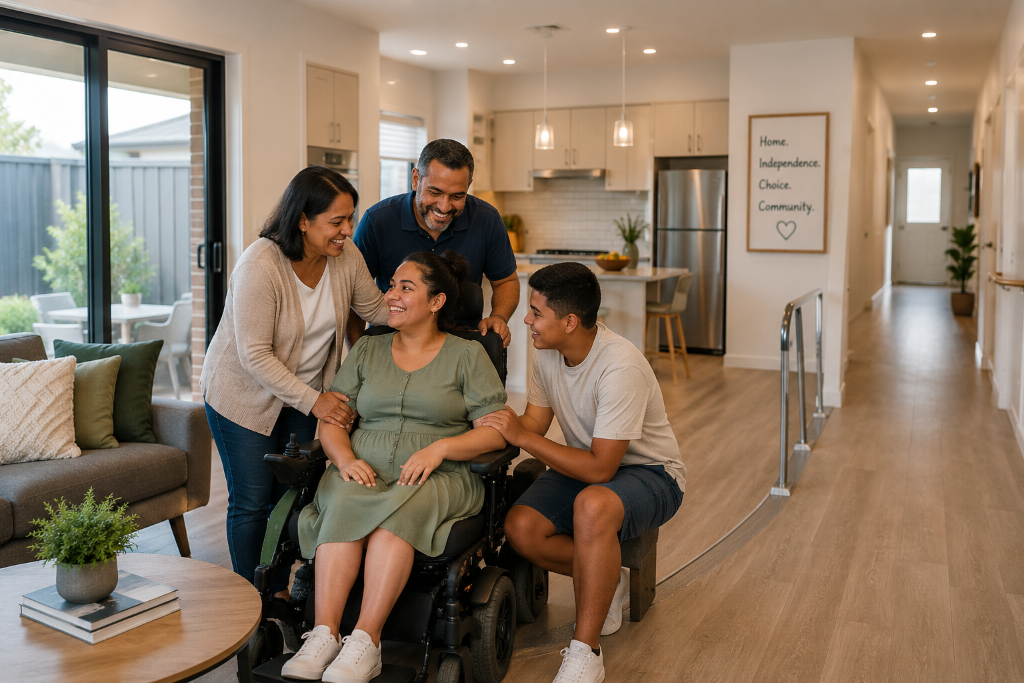
What is Supported Independent Living (SIL)? A Complete Guide for NDIS Participants
Supported Independent Living (SIL) is one of the most significant NDIS supports available — here's everything you need to know about how it works, who qualifies, and how to find SIL vacancies near you.
Technology and the Future of Supported Independent Living
How technology can strengthen supported decision-making, participant choice and service quality in Supported Independent Living under the new SIL Practice Standards.

How AI Compatibility Assessments Are Reducing SIL Vacancies for NDIS Providers
SIL vacancies represent a significant financial risk for disability housing providers. Here's how AI-powered participant matching is helping providers fill vacancies faster and improve long-term tenancy outcomes.
Ready to find your SIL match?
Search available SIL vacancies across Australia or create a free participant profile to receive matched recommendations.